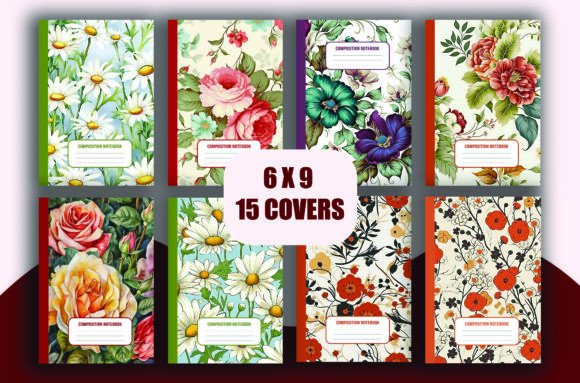
Composition Notebook Journal Cover for KDP Publishing
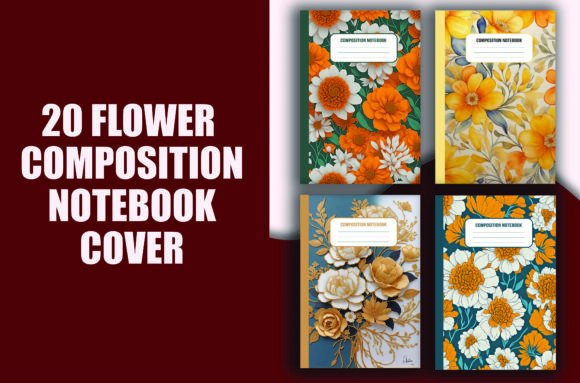
If you are building a print-on-demand business or publishing through Amazon Kindle Direct Publishing, the cover is your first and often only chance to make an impression. A thoughtful, visually consistent cover can mean the difference between a browser and a buyer. The Composition Notebook Journal Cover bundle offers exactly that kind of foundation—twenty ready-to-use PDF files designed specifically for 6 x 9 inch books with 100 interior pages. Whether you are launching a series of guided journals, academic notebooks, or personal diaries, these design assets give you a professional starting point without requiring advanced design skills.
Visual Characteristics and Personality of the Composition Notebook Journal Cover
This cover bundle draws heavily from the familiar, nostalgic aesthetic of classic composition notebooks. Think clean lines, subtle textures, and a structured layout that feels both academic and approachable. The covers in this set typically feature a balanced composition with space for titles, subtitles, and author names, all framed by borders or ruled patterns that echo the notebook interior.
The personality is grounded, reliable, and slightly retro. It does not try to shout for attention. Instead, it invites the reader with a sense of familiarity—a visual cue that says, this is a place for ideas, notes, and creative work. For publishers targeting students, teachers, journal keepers, or professionals who appreciate understated design, this style resonates because it feels authentic rather than overly produced. The color palette across the bundle tends toward muted tones, classic marbled patterns, and soft contrasts, which work especially well for nonfiction categories like self-help, education, productivity, and personal development.
From a typography perspective, the covers often pair well with a strong serif font or a clean sans serif font for the main title, while handwritten font or script font accents can be added for subheadings or decorative elements. This mix creates visual hierarchy without cluttering the layout. The cover itself acts as a canvas—it is structured enough to guide your design choices, but flexible enough to let your branding come through.
Where the Composition Notebook Journal Cover Works Best
Because the bundle is built around a 6 x 9 inch trim size, it aligns perfectly with standard trade paperbacks. That makes it a natural fit for Amazon KDP and other POD platforms like IngramSpark or Lulu. But the application goes beyond just book publishing. The clean, familiar aesthetic of these covers translates well into several other contexts.
In branding and marketing, small business owners and freelancers can use these designs for client workbooks, planning guides, or lead magnets. The notebook style implies process and thoughtfulness, which works well for service-based brands that want to communicate expertise. For editorial design, think zines, mini-magazines, or instructional booklets—the composition notebook look gives printed materials a handmade, approachable feel that stands out against overly polished corporate design.
For digital projects, these covers work as templates for social media graphics promoting your book, or as mockups in your online store. You can pull the cover design into a post or ad, and the familiar notebook aesthetic immediately signals content that is educational or reflective. Even in packaging design, the composition notebook style can be adapted for product inserts, instruction cards, or branded stationery sets. The versatility comes from the fact that the design does not rely on trendiness—it uses a visual language that most adults recognize from their own school years.
How Cover Design Influences Readability, Brand Perception, and Engagement
A cover does more than wrap a book. It sets expectations. When a potential reader sees the Composition Notebook Journal Cover, they subconsciously associate it with writing, learning, and organization. That context primes them to engage with the content in a specific way. If your book is a guided journal or a study planner, this cover already does half the work of communicating your book’s purpose.
Readability on a cover is about more than font size. It is about contrast, spacing, and how the title sits within the overall layout. Bundles like this one tend to keep the background clean, which means you can add a modern typography treatment without worrying about visual noise. A well-chosen premium font for the title will stand out clearly, while a supporting sans serif font for the subtitle keeps the information hierarchy intact. This clarity helps customers make quick decisions—especially on a platform like Amazon where thumbnails are tiny.
Brand perception benefits from consistency. If you publish a series of notebooks or journals, using the same cover style across all titles creates a recognizable brand identity. Readers who pick up one book will recognize the next. Over time, that visual shorthand builds trust. The Composition Notebook Journal Cover bundle gives you that consistency out of the box, since all twenty files follow the same design language. You can vary colors or small details while keeping the core structure the same.
Audience engagement starts at the cover. A design that feels familiar and trustworthy lowers the barrier to purchase. People are more likely to click, read the description, and ultimately buy when the cover aligns with their expectations. For categories like education, productivity, or personal development, the composition notebook style is almost a genre marker. It tells the buyer, this is the kind of book I can actually use.
Practical Guidance for Choosing and Using the Composition Notebook Journal Cover
When you are evaluating this bundle for your next project, start by considering your audience and the book’s purpose. The 6 x 9 inch size is ideal for workbooks, journals, planners, and study guides. If your content is more visual or heavily illustrated, you might want a different format. But for text-heavy or note-oriented books, this size and style combination is hard to beat.
Evaluating Project Fit
Ask yourself: Does the book benefit from a no-nonsense, academic, or nostalgic look? If yes, this cover style is a strong match. Also consider your genre categories on KDP. Notebook-style covers perform well in subcategories like journal writing, study aids, creativity, and self-management. The style can also work for fiction if the story has a diary or epistolary format, but it is most at home in nonfiction.
Testing Font Pairings
Since the cover background is relatively neutral, you have room to experiment with font pairing. A classic approach is to use a serif font for the main title—something with weight and personality—and a clean sans serif font for the subtitle or author name. If you want a more personal feel, a handwritten font for the title can mimic the look of real notebook writing. Just make sure the typeface you choose is a commercial font with proper licensing for print use. Many premium font foundries offer bundle deals that include both serif and sans serif options, making it easy to build a consistent look across your entire series.
Reviewing Included Styles and Customization
The bundle includes 20 PDF files, each tailored for a 6 x 9 inch, 100-page book. Because PDFs are not natively editable in most free software, you will want to use Adobe Illustrator to resize or modify elements. The description explicitly states that resizing is possible with Illustrator, so if you are comfortable with that tool, you can adapt the cover for slightly different trim sizes or add your own text and branding. If you prefer a more hands-off approach, you can use the PDF as-is and simply overlay your title and author name using a program like Canva or InDesign.
Readability Considerations
Keep your title concise. A long title on a 6 x 9 cover can feel cramped, especially if you are using a large serif font. Aim for three to five words maximum for the main title, and let the subtitle carry additional context. Test your cover at thumbnail size—if the title is hard to read when scaled down, simplify. The clean background of this cover style helps, but font choice and size still matter.
Commercial Licensing
Always verify that any fonts, images, or design elements you add to the cover are cleared for commercial use. The cover files themselves are included for commercial application, but any third-party typefaces you introduce need their own license. Most reputable font foundries offer standard desktop licenses that cover print use in books. If you plan to sell the book globally or in large quantities, check for any volume limitations in the license agreement.
Realistic Examples and Design Observations
Imagine you are publishing a 100-page gratitude journal. With the Composition Notebook Journal Cover, you can choose a file that uses a soft pastel marbled background. Add a title like Daily Gratitude in a bold serif font, and a subtitle in a lightweight sans serif. The result feels personal, warm, and approachable—exactly what a gratitude journal buyer is looking for. The cover does not try to be trendy; it feels like something that will sit on a nightstand and actually get used.
Or consider a study planner for college students. Use a cover file with a classic black-and-white marble pattern. Pair it with a sans serif font for the title—something clean like Helvetica or Montserrat—and a smaller handwritten font for a tagline like Stay Organized This Semester. The contrast between the structured cover and the casual handwritten accent creates visual interest without overwhelming the layout.
For a small business creating branded client workbooks, you might choose a uniform cover for a six-part series on business planning. Using the same cover structure across all volumes, with different accent colors, builds a cohesive brand identity that clients will recognize. Over time, that visual consistency reinforces your professionalism and attention to detail.
Practical Recommendations
If you are new to KDP publishing, start with one or two covers from the bundle and test them with your audience. Pay attention to which designs generate the most clicks and conversions. You can always iterate. For experienced publishers, use the bundle to quickly scale a series of related books—twenty covers gives you plenty of room to experiment with color variations and niche subcategories.
Consider building a simple style guide for your brand. Note which fonts you use for titles, subtitles, and author names, and keep a list of your preferred font pairings. This makes it easy to maintain consistency across multiple titles. If you work with a designer, share the cover files and your style guide so they can create additional variations without reinventing the look each time.
Finally, do not underestimate the power of a cover that feels intentional. The Composition Notebook Journal Cover bundle gives you a solid foundation. Your job is to add the right typography, tone, and messaging to make it your own. When done well, the result is a cover that does not just look good—it signals to the reader that this book was made for them.
Visit my store for more composition notebook covers and explore the full range of design assets available for your KDP and POD projects. Whether you are launching your first title or expanding an existing series, having a library of reliable cover templates saves time and keeps your brand consistent across every book you publish.