Bird Watching Logbook Journal Interior: Your Complete Field Companion for Avian Discovery
There is something quietly transformative about stepping outside with binoculars in hand, a notebook tucked under your arm, and the intention to truly see the birds around you. Whether you are standing at the edge of a salt marsh at dawn, wandering a woodland trail in autumn, or simply sitting in your own backyard, the act of recording what you observe deepens every encounter. The Bird Watching Logbook Journal Interior is designed to be that faithful companion—a space where field notes become memories, sketches become records, and casual sightings evolve into a lifetime of ornithological discovery.
This article explores the thoughtful design of this journal, its practical applications for birders of all skill levels, and how its unique features—including a keyword-rich Excel spreadsheet—can help you share your passion with a wider community. Whether you are new to birdwatching or a seasoned naturalist, understanding what lies inside this logbook will help you decide if it is the right tool for your next adventure.
What Makes the Bird Watching Logbook Journal Interior Distinctive?
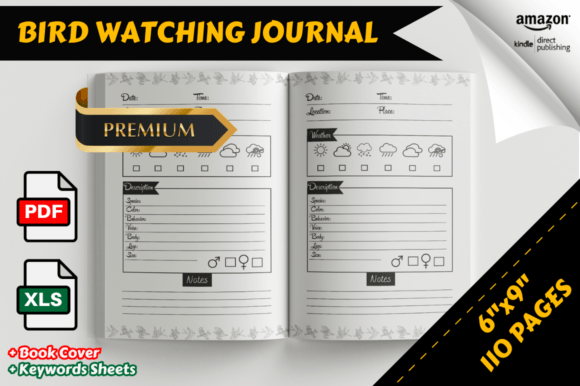
At first glance, a birding journal seems straightforward: you note the species, the date, and perhaps a few observations. But the Bird Watching Logbook Journal Interior goes several steps further. With 110 pages in a portable 6x9-inch format, each page is intentionally laid out to capture not just data, but the full story of an encounter.
Structured Pages for Depth and Detail
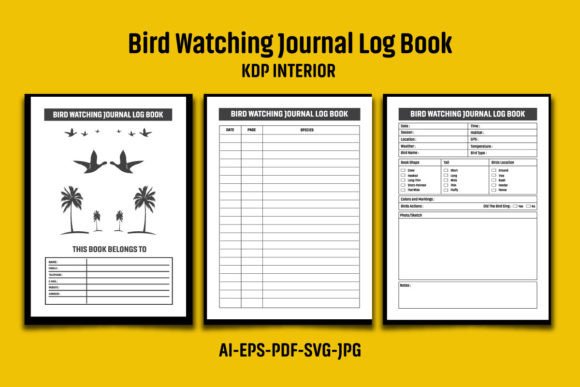
Every spread invites you to record more than just a name. The journal includes dedicated sections for:
- Species identification with space for common and scientific names
- Location and habitat details—wetland, forest edge, urban park, coastal cliff
- Behavior observations such as feeding patterns, flight style, vocalizations, and social interactions
- Weather and time of day to help you understand how conditions affect bird activity
- Personal notes for reflections, questions, or connections to field guides
This structure encourages you to slow down and look carefully. Instead of simply ticking a box, you are prompted to ask: What was the light like? How did the bird move through the branches? Was it alone or in a flock? Over time, these details accumulate into a rich personal database of avian life.
A Canvas for Sketches and Visual Notes
Not every birder is an artist, and the journal accommodates that generously. Each page offers ample blank space for quick field sketches, diagrams of wing patterns, or doodles of a bird's posture. You do not need to produce gallery-quality drawings; even rough outlines help fix a sighting in memory. The Bird Watching Logbook Journal Interior treats sketching as a tool for learning, not an exercise in perfection.
Who Benefits Most from This Journal?
Birdwatching is wonderfully democratic—it welcomes anyone with curiosity. But different users will find different value in this journal's design.
The Beginning Birder
If you are just starting out, the journal provides gentle structure without being overwhelming. The prompts guide you toward what to notice: size, shape, color, behavior. You do not need to know every species name on day one. The act of writing and sketching helps you build observation skills that transfer directly into better birding. Many beginners find that after a few outings, they start noticing details they previously missed—the flash of a white rump patch, the cadence of a song, the way a hawk holds its wings in a glide.
The Experienced Ornithologist or Citizen Scientist
For seasoned birders, the journal functions as a rigorous field log. The consistent layout makes it easy to compare sightings across seasons or locations. If you contribute data to citizen science projects like eBird or local bird atlases, having detailed handwritten notes is invaluable when you transfer observations to digital platforms. The Bird Watching Logbook Journal Interior becomes a bridge between the field and the database.
The Traveling Naturalist
If you bird while traveling—whether across state lines or across continents—the journal is compact enough to slip into a daypack. Its 6x9-inch size fits comfortably in hand and on most picnic tables, car dashboards, or cabin bunks. Recording sightings from different ecosystems helps you spot patterns in distribution, migration timing, and habitat preference.
Real-World Scenarios: How the Journal Enhances Your Birding
To understand the journal's practical value, consider a few common birding situations.
Scenario 1: A Morning at a Migratory Hotspot
You arrive at a coastal bird sanctuary just after sunrise. Warblers are moving through the treetops, a flock of sandpipers works the mudflats, and an osprey circles overhead. In a standard notebook, you might jot down a few names and move on. But with the Bird Watching Logbook Journal Interior, you pause to record the number of each species, the direction of migration, the wind speed, and the precise habitat where each bird was seen. Later, you notice that the warbler flock stayed in the oak canopy while the sparrows foraged in the understory. These small observations, accumulated over many mornings, reveal the layered ecology of the site.
Scenario 2: Backyard Birding with Children
Birdwatching is a wonderful activity to share with kids. The journal gives them a place to draw the cardinal that visits the feeder, note its favorite seed, and track how often it comes. You can use the journal together to create a simple phenology calendar—when do the hummingbirds arrive in spring? When do the juncos return in fall? The structured pages make it easy for young naturalists to contribute without feeling lost.
Scenario 3: A Photographer's Field Notes
Many bird photographers also keep field journals to log the conditions that produced their best images. The journal's space for light conditions, time of day, and behavior notes helps you replicate successful shoots. You might record that the best light for photographing woodpeckers occurs between 8:00 and 9:30 AM in a particular part of the forest, or that a certain songbird species tends to perch on the same dead branch each afternoon.
The Excel Spreadsheet: A Surprising but Powerful Bonus
One of the most distinctive elements of this package is the inclusion of a keyword Excel spreadsheet. At first, you might wonder why a birding journal comes with a digital keyword tool. The answer lies in the modern birder's desire to share their passion online. Whether you run a birding blog, contribute to a species-focused website, or simply want to improve your social media posts, the spreadsheet provides a curated list of search terms and phrases that help your content reach the right audience.
For example, if you write about a rare warbler sighting, the spreadsheet suggests keywords like "warbler migration patterns," "warbler identification tips," and "best binoculars for birding." You can use these to improve your blog posts, YouTube descriptions, or Instagram captions. The spreadsheet is not a gimmick—it is a practical tool for anyone who wants to connect with the global birding community online.
How to Use the Spreadsheet
- Open the spreadsheet and browse the keyword categories—species names, habitats, equipment, behaviors, and locations.
- Copy relevant keywords into your blog or social media platform.
- Combine keywords naturally with your own writing. Avoid stuffing; instead, weave them into sentences about your actual experience.
- Track which terms resonate with your audience over time, and refine your approach.
For birders who also run small businesses (field guides, tour operations, or photography services), this spreadsheet can be a subtle but effective way to boost visibility without resorting to aggressive marketing.
Strengths, Considerations, and Practical Limitations
No product is perfect for every situation, and honesty about limitations helps you make an informed choice.
Strengths
- Thoughtful page design: The layout balances structure with freedom, making it useful for both novices and experts.
- Portable but substantial: 110 pages offer longevity without being bulky.
- Cover design included: The PDF cover protects your journal and adds a touch of personal style.
- Keyword spreadsheet: A genuinely useful addition for online content creators.
- All skill levels welcome: The journal adapts to your experience level.
Considerations
- Digital format: The journal is delivered as a PDF. You will need to print it or use it with a note-taking app. This gives you flexibility but requires access to a printer or tablet.
- No pre-printed species lists: Some birders prefer a checklist of common species. This journal opts for open-ended pages, which encourages discovery but means you write species names yourself.
- Binding not included: If you print at home, you will need to bind the pages yourself or use a ring binder. This is not a drawback for many, but it is worth noting.
Practical Expectations
Do not expect the journal to replace a field guide or a birding app. It is a complement to those tools—a place for synthesis and reflection. The real value emerges over weeks and months of consistent use. A journal filled with a single season of sightings becomes a treasure; a journal kept for years becomes a legacy.
How to Evaluate If This Journal Is Right for You
Before purchasing, ask yourself a few questions:
- Do I enjoy writing and sketching as part of my birding experience?
- Am I looking for more structure than a blank notebook provides, but less rigidity than a pre-printed checklist?
- Do I want to share my birding experiences online or with a local club?
- Am I willing to print and assemble the journal myself?
If you answered yes to most of these, the Bird Watching Logbook Journal Interior will likely serve you well. If you prefer a completely digital workflow or a pre-bound notebook, you might look elsewhere—but you would miss out on the customizable freedom this format offers.
Final Thoughts: A Journal That Grows With You
The best birding journals are not just logs; they are companions that shape how you see the world. The Bird Watching Logbook Journal Interior, with its 110 pages of structured yet flexible design, its charming cover, and its unexpected Excel spreadsheet, invites you to become a more careful observer and a more connected member of the birding community.
Whether you are chasing lifers in a remote refuge or watching house sparrows from your kitchen window, this journal meets you where you are. It does not demand expertise—it cultivates it. And in a world that often moves too fast to notice the flicker of a wing or the trill of a song, that is a gift worth opening.
So grab your binoculars, download your journal, and step outside. The birds are waiting, and your logbook is ready.