Mental Health Wellness Check Planner: A Practical Tool for Real Life
There is a quiet moment many of us know well. You sit down after a long week, and someone asks how you are really doing. The honest answer is not always clear. Life moves fast. Between work, family, social obligations, and the constant hum of notifications, checking in with yourself can feel like one more thing on an endless to-do list. That is where a Mental Health Wellness Check Planner steps in. It is not a journal full of blank pages that demand deep introspection on demand. It is a structured space designed to help you pause, notice, and respond to your own mental state without pressure or judgment.
What This Planner Actually Does
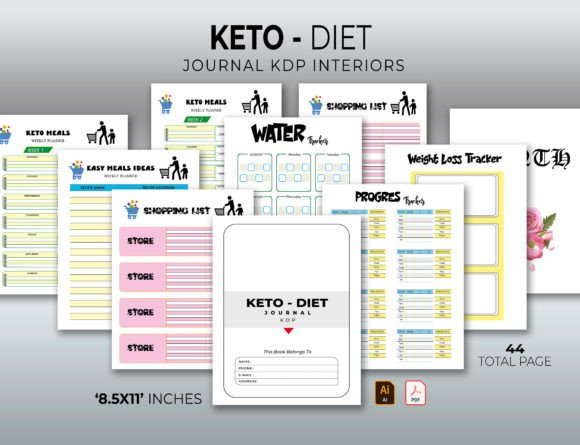
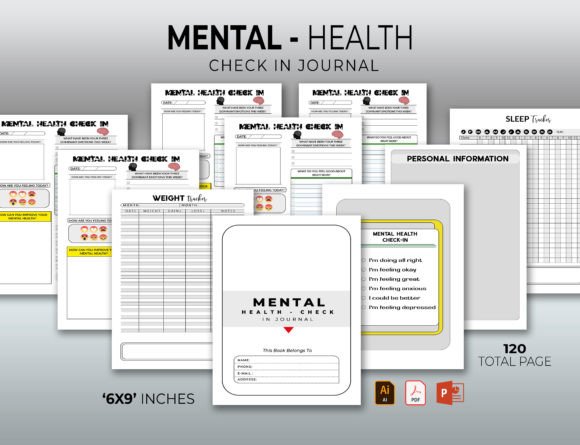
At its core, a Mental Health Wellness Check Planner offers a repeatable framework for observing your own emotional and mental patterns. Think of it as a consistent touchpoint rather than a one-time fix. The version that comes as a KDP interior with 120 pages, formatted at 6 x 9 inches, is built to be printed or uploaded directly. It includes fully editable vector files, high-quality 300 dpi resolution, and a clean no-bleed PDF ready for upload or print at home, in your office, or at a print shop. The 100 resizable vector shapes allow for visual flexibility if you want to customize colors or layout in Illustrator CC 2019. But beyond the file specs, the real value lives in how you actually use something like this week after week.
Navigating Transitions: When Life Shifts Under Your Feet
Transitions are some of the most vulnerable periods for mental health. A move to a new city, a career change, the end of a relationship, or becoming a parent can leave you feeling untethered. In these moments, it is easy to lose sight of your baseline. A wellness check planner becomes a grounding mechanism. You might use it to track your sleep, your energy levels, and your social interactions over a few weeks. The patterns that emerge can be surprising. For example, you may notice that your mood dips every Tuesday afternoon, or that you feel more anxious on days when you skip lunch. Without a dedicated space to record these observations, they remain invisible. The planner provides a container for noticing.
Balancing Demanding Careers: The High-Performer's Quiet Check
Professionals in high-pressure environments often neglect their mental health because they are trained to push through. A software engineer working on a tight deadline, a nurse finishing double shifts, or a small business owner juggling payroll and client expectations might feel fine in the moment. But cumulative stress has a way of sneaking up. Using a Mental Health Wellness Check Planner in this context is less about emotional processing and more about early detection. You might note how many hours you worked, how often you felt irritable, or whether you took time for a real break. Over time, these small data points reveal when you are heading toward burnout long before it fully arrives. It becomes a professional resilience tool as much as a personal one.
Parents and Caregivers: Checking In When You Are Busy Caring for Others
Parents, especially those with young children or aging parents, often put their own mental health last. There is simply no space in the day for a long reflective journaling session. A structured planner with a clear format can be used in five minutes while coffee brews or during a child's nap. You can rate your stress level, note one thing that went well, and identify a small adjustment for tomorrow. The consistency matters more than the depth. Over months, a parent might notice that their anxiety spikes on days with back-to-back appointments, or that they feel more patient after a brief walk. These insights are actionable. The planner does not ask for hours of self-reflection. It asks for a few honest checkmarks and a short sentence.
Creative Professionals: Protecting the Creative Spark from Burnout
Writers, designers, musicians, and other creatives often rely on their emotional state to produce work. That can be a double-edged sword. When mental health dips, creative output often suffers. A wellness check planner helps creatives separate temporary mood fluctuations from deeper patterns. You might track your inspiration levels alongside your sleep and nutrition. You may discover that your best ideas come on days when you took a real lunch break, or that your creative block coincides with skipped meals. This kind of self-awareness is not about forcing productivity. It is about understanding the conditions that allow your mind to work well and protecting them.
Students and Young Adults: Building Awareness Early
University students and young professionals are navigating a period of life where mental health challenges often first emerge. A planner that is easy to use and visually clean can serve as an introduction to self-monitoring. Instead of waiting for a crisis, a student might use the planner to track their mood alongside exam schedules, social activities, and exercise. The 100 resizable vector shapes in the design file allow for personalization, which can make the process feel less clinical and more like a creative outlet. The key is that the habit starts early. Building a simple wellness check into a weekly routine during young adulthood can establish a foundation for lifelong mental health awareness.
The Pragmatic User: Using Data to Make Decisions
Some people are not naturally introspective. They prefer facts, numbers, and trends. For them, a Mental Health Wellness Check Planner functions like a personal dashboard. They can track metrics like hours of sleep, number of social interactions, physical activity, and subjective mood ratings. Over several weeks, they can look for correlations. The planner becomes a decision-making tool: "When I sleep seven hours, my mood is consistently higher. When I skip exercise for three days, my anxiety increases." This user does not need emotional prompts. They need a reliable format to collect data. The KDP interior format with 50 pages of content and high-quality print-ready files makes it easy to create multiple copies or iterate on the design for different periods.
The Reflective User: Creating Space for Honest Expression
Other users crave a private space to express what they cannot say out loud. For them, the planner is a safe container where they can admit that they are struggling, celebrate small wins, or simply observe their own thoughts without editing. The structured format prevents the overwhelming blank page syndrome. A prompt like "What felt heavy today?" or "What was a bright moment?" gives direction without being prescriptive. Over time, this user may fill the pages with observations that reveal deeper narratives. They might notice recurring themes around self-criticism or relationship dynamics. The planner does not solve these issues, but it brings them into the light where they can be acknowledged.
The Busy Professional: Efficiency Without Guilt
For someone with a packed schedule, the appeal of a wellness planner is that it respects their time. The no-bleed 6 x 9 inch PDF is designed to be printed quickly, or uploaded directly to a tablet for digital use. The check-in can be completed in under two minutes. There is no pressure to write paragraphs. A few circles, a rating scale, and a single sentence suffice. This user benefits from the planner because it creates a routine of pausing, even briefly. Over months, that small pause accumulates into a meaningful practice of self-awareness. The planner is not another demand on their time. It is a structured shortcut to the kind of reflection that often gets skipped.
Common Considerations Before Choosing a Wellness Check Planner
Not all planners fit all people. Before committing to a particular format, it is worth thinking about how you actually behave. Do you prefer digital or physical? The Mental Health Wellness Check Planner with its ready-to-upload PDF and included JPEG images works for both. You can print it at home, take it to a print shop, or load it onto a note-taking app. The editable vector files mean you can adjust colors, add your own labels, or change the layout entirely if you have access to Illustrator CC 2019. That flexibility is a real strength for users who like to tailor tools to their preferences.
Another consideration is consistency. A planner only works if you use it. Some people thrive on daily entries, while others find weekly check-ins more sustainable. The 120-page count in this interior allows for daily use over several months or weekly use for a full year. Think about which rhythm matches your current life stage. It is better to check in weekly for a year than to burn out on daily entries after two weeks. The 300 dpi high-quality print ensures that if you do print multiple copies, they will look clean and professional, which can actually encourage continued use.
There is also the question of privacy. A wellness planner contains personal information. If you share a home or office, you may want a format that is easy to store or discreet. The 6 x 9 inch size is compact enough to tuck into a drawer or bag. The no-bleed design means that printing is straightforward without trimming issues, and you can produce a clean, professional-looking book that does not draw attention.
A potential limitation worth noting is that no planner replaces professional mental health support. A wellness check planner is a tool for self-awareness and pattern recognition. It can help you notice when something is off, but it is not a substitute for therapy, medication, or crisis intervention. If you find that your check-ins consistently reveal deep distress, that is a signal to seek help from a qualified professional. The planner functions best as a complement to other forms of care, not a replacement.
Another observation: some users find structured formats restrictive. If you prefer completely open-ended journaling, a guided planner might feel confining. The Mental Health Wellness Check Planner with its vector shapes and editable components does offer room to adapt, but it is still a pre-designed system. For people who thrive on total freedom, a blank notebook may be a better fit. For those who appreciate guardrails and prompts, this format is likely ideal.
The Quiet Strength of a Simple Routine
What makes a wellness check planner genuinely useful is not the design or the file format, though those help. It is the habit of showing up for yourself regularly. The 100 resizable vector shapes and the polished print-ready file are enablers. They make the process smooth, attractive, and easy to maintain. But the real transformation happens in the quiet moments when you pause, look at your own patterns, and decide what needs attention. Whether you are a busy parent, a high-performing professional, a creative soul, or someone navigating a life transition, the act of checking in with yourself is a small but powerful act of care. A Mental Health Wellness Check Planner simply makes that act easier to repeat until it becomes second nature.