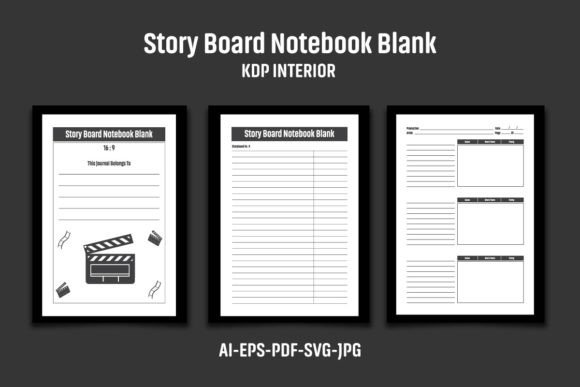
Story Board Notebook Blank KDP Interior
If you publish low-content books on Amazon KDP, finding a clean, flexible interior that works across multiple projects can save hours of formatting. A storyboard notebook blank KDP interior does exactly that—it gives you a ready-made template designed for visual planning, creative sketching, and professional presentation. Whether you are selling notebooks for filmmakers, educators, or small business owners, this type of interior offers a solid foundation that you can customize quickly and publish with confidence.
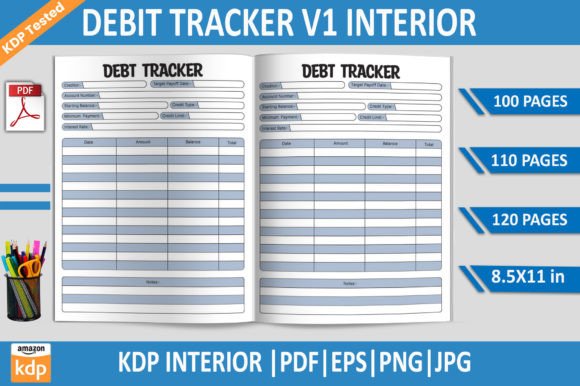
What makes this particular interior stand out is the range of file formats and the attention to print-ready details. You receive one AI file, one EPS file, one PDF file, three JPG files, and one SVG file. That means you can edit the interior in Adobe Illustrator, open it in other vector software, or use the raster versions for previews and mockups. The PDF is already set up as a paperback book interior with 120 pages, dimensions of 8.5″x11″ with bleed (the overall file is 8.62 x 11.25 inches), and a high-resolution 300 DPI black-and-white layout. Because it uses black and white, you can change colors easily in the AI or EPS files, which gives you control over branding or theme without starting from scratch.
Why a storyboard notebook interior matters for your KDP catalog
Storyboard notebooks serve a practical need. People use them to map out video scenes, plan marketing campaigns, organize classroom lessons, draft comic panels, or brainstorm product launches. The blank grid or panel structure allows ideas to flow visually, which is why creators, entrepreneurs, and educators seek them out. By offering a storyboard notebook blank KDP interior, you give your customers a tool that supports their creative and professional work. And because the interior is pre-formatted with bleed and proper dimensions, you avoid the common pitfalls of margins, trimming issues, or low-resolution printing.
From a publishing perspective, this interior simplifies the entire production process. You do not need to draw boxes, align panels, or calculate margins. The hard work is already done. You simply open the file, add your own branding or cover design, and upload to KDP. That speed matters when you want to test different niches or launch multiple titles. It also reduces the risk of errors that can lead to rejected uploads or poor print quality.
Who benefits most from this type of interior
Several groups find particular value in a storyboard notebook blank KDP interior. Independent publishers who sell notebooks for filmmakers and video producers will appreciate the clean, professional panel layout that works for shot planning. Marketing professionals and content strategists can use the notebook to draft ad sequences or social media storyboards, and entrepreneurs often buy these for brainstorming sessions. Educators and trainers may use them to plan lesson flows or visual aids. Bloggers and freelancers who create digital or printed planners can also incorporate storyboard pages into larger hybrid notebooks.
For KDP sellers, this interior eliminates the repetitive work of designing each page from scratch. You get a consistent, scalable template that you can adapt for different audiences by simply changing the cover, title, and description. That efficiency is especially helpful if you want to build a series of notebooks around visual planning without investing hours in page layout for every single title.
Practical benefits that save time and improve results
The file set includes formats that work across different workflows. The AI and EPS files are version CS6, which means they open in older and newer versions of Illustrator. If you prefer vector editing for precise scaling or color changes, those files give you full control. The SVG file is useful for web previews or for customers who want to see the layout before purchasing. The three JPG files can serve as product images or sample pages on your listing, helping potential buyers understand exactly what they will receive. And the PDF is print-ready, which means you can upload it directly to KDP after adding your identification mark.
Because the interior is black and white, printing costs remain low, and the 300 DPI ensures crisp lines even on standard paper. The 120-page count hits a sweet spot for many notebooks—it feels substantial without being too thick, which helps with both production costs and shipping. The 8.5″x11″ size is a common choice for storyboard notebooks because it provides enough space for detailed sketches and notes while remaining easy to handle.
How to use the files effectively
All files come compressed in a single ZIP folder. You will need to extract them using WinZIP, WinRAR, or by double-clicking on most modern operating systems. Once extracted, you can open the PDF to see the finished interior as a reference. If you want to make changes, use the AI or EPS file in Adobe Illustrator. You can adjust the color of the lines, add your own logo or graphic on each page, or incorporate additional design elements. The interior is designed for easy color changes, so you are not locked into a specific palette.
Before uploading to Amazon KDP, add your own logo or graphic to the interior pages. This step is important to prevent duplicate content flags. Since many sellers use similar templates, Amazon may flag identical interiors unless you add a unique identifier. A small logo, a brand name, or a simple graphic at the bottom of each page is usually enough to differentiate your file. The images, text, and mockups shown in the product presentation are not included in the download—they are only for illustrating how the interior could look. You must supply your own cover and any additional branding elements.
Limitations and fit considerations
While this interior is versatile, it is worth considering a few points before purchasing. The 120-page count is fixed in the PDF, though you could duplicate pages in the editable files if you need more. The design is storyboard-focused with blank panels, so it may not suit customers looking for dot grid, lined, or fully structured planner pages. If your target audience needs a combination of storyboard and note pages, you might need to blend this interior with other templates. Also, because the interior is black and white, it works best for notebooks that do not require color printing. If you plan to sell a version with colored backgrounds or graphics, you will need to edit the files accordingly.
For publishers who want to build a coherent brand, the ability to change line colors and add custom elements makes this interior adaptable. You can create a cohesive look across multiple notebooks by using the same base interior with different cover designs and slight color variations. This consistency can help your catalog look professional and intentional, which builds trust with customers.
Realistic use cases across different niches
A KDP seller targeting film students might publish a notebook titled “Film Scene Planner” using this interior, with a cover that shows camera icons and a film reel. An entrepreneur selling to marketers could rename it “Content Strategy Storyboard” and use a clean, corporate cover design. An educator might create “Lesson Flow Notebook” with a simple, child-friendly cover. In each case, the interior remains the same, but the positioning changes based on the audience. This flexibility is one of the strongest advantages of using a blank storyboard interior—it is not tied to any single niche.
For freelancers and small business owners who create their own notebooks, this interior can also serve as a brainstorming tool. You can print pages at home for personal use or sell them as part of a limited run. Because the files are high resolution, you can scale them for different print sizes if you adjust the bleed and margins in the editable formats.
Final recommendations for getting the most from this interior
Take time to explore the AI and EPS files before finalizing your design. Test color changes, add your logo in a consistent position, and check how the pages look in a print preview. Use the JPG files to create compelling listing images that show the interior layout, the panel structure, and the quality of the lines. Mention the file formats and page count in your product description so customers know exactly what they are getting. If you plan to sell multiple notebooks, create a naming convention for your interiors so you can easily reuse and modify them for different titles.
A storyboard notebook blank KDP interior like this one helps you focus on marketing, cover design, and audience research instead of page layout. It gives you a professional, print-ready foundation that supports creative planning for a wide range of users. Whether you are just starting your KDP publishing business or expanding an existing catalog, this interior can simplify your workflow and help you get books to market faster. Just remember to add your own branding, test the files, and match the interior to the right audience for the best results.